
How to Save Money on a Low Salary: Simple and Practical Tips
Managing monthly expenses can be challenging when the cost of food, transportation, bills, shopping, and other necessities continues to increase. Many people want to save more money but don’t know where to start.
The good news is that reducing expenses doesn’t always mean making major lifestyle changes. Small adjustments to your daily spending habits can help you save a significant amount over time.
Whether you have a low salary, are trying to pay off debt, or simply want to improve your financial habits, these practical tips can help you reduce your monthly expenses.
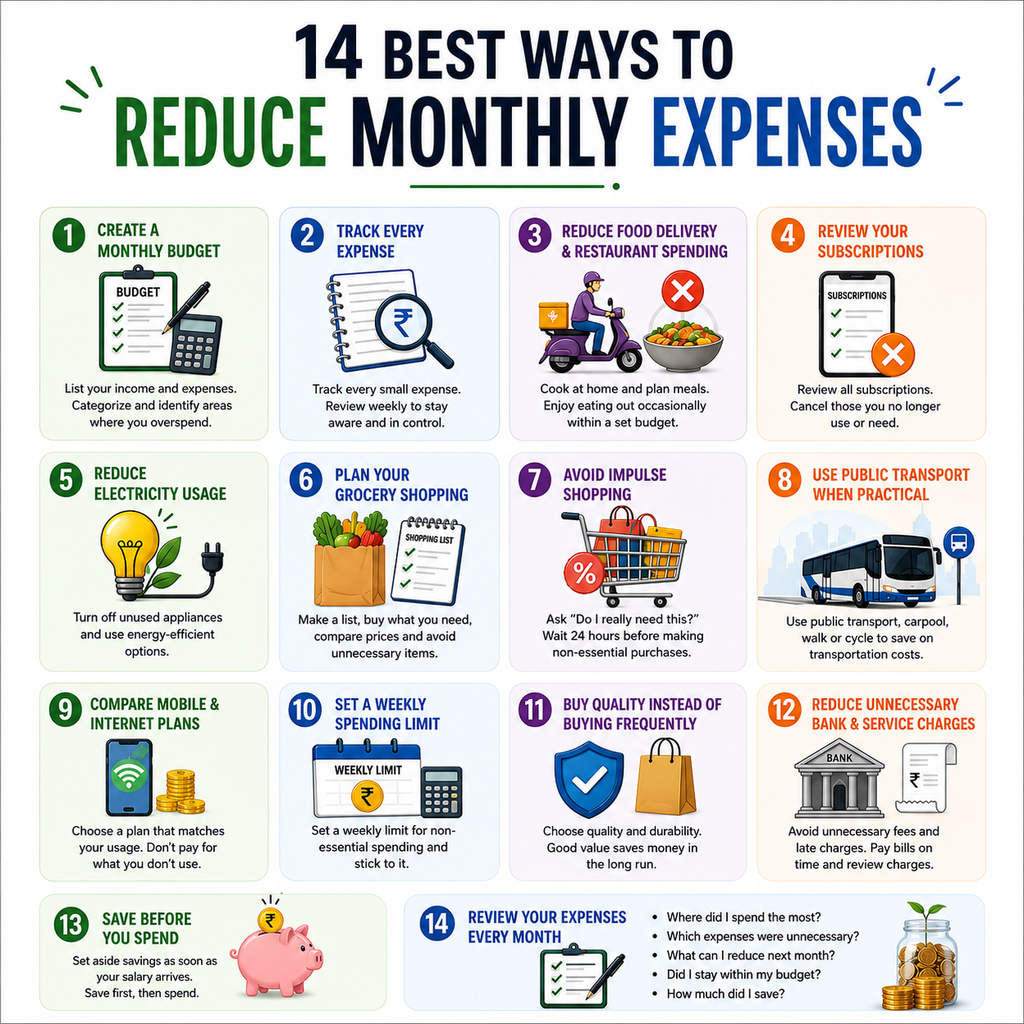
1. Create a Monthly Budget
The first step toward reducing expenses is understanding where your money goes.
Write down your monthly income and list all your expenses. Divide them into categories such as:
- Rent or housing
- Groceries
- Transportation
- Electricity and other bills
- Mobile and internet
- Shopping
- Entertainment
- Food delivery
- Savings
- Debt payments
Once you have everything written down, it becomes easier to identify areas where you may be spending more than necessary.
2. Track Every Expense
Small purchases can easily add up.
A ₹100 snack, ₹200 online purchase, or ₹300 food order may not seem significant individually. But several small expenses every week can become a large amount by the end of the month.
Track your spending using a notebook, spreadsheet, or budgeting app. Review your expenses at least once a week.
This simple habit can make you more aware of unnecessary spending.
3. Reduce Food Delivery and Restaurant Spending
Food delivery can become one of the easiest ways to overspend.
Instead of ordering food several times a week, try preparing meals at home. Plan your meals before going grocery shopping and buy only what you need.
You can still enjoy restaurants occasionally, but setting a monthly food-out budget can prevent spending from getting out of control.
4. Review Your Subscriptions
Take a look at all the subscriptions you currently pay for.
You may have subscriptions for:
- Streaming services
- Music
- Cloud storage
- Gaming
- Fitness apps
- Premium software
- News websites
Ask yourself whether you are using each service regularly.
Cancel subscriptions you no longer need. Even saving ₹100–₹500 per month from unused services can add up over a year.
5. Reduce Electricity Usage
Your electricity bill may be higher than necessary because of simple habits.
Turn off lights, fans, air conditioners, and other appliances when they aren’t being used.
Use energy-efficient appliances where practical and avoid leaving electronic devices running unnecessarily.
Small changes in electricity usage can help reduce your monthly utility bill.
6. Plan Your Grocery Shopping
Grocery shopping without a plan can lead to unnecessary purchases.
Before going to the store, create a shopping list. Check what you already have at home and avoid buying duplicate items.
You can also compare prices between different stores or legitimate shopping platforms before purchasing expensive products.
Buying commonly used items in suitable quantities can sometimes reduce the cost per unit, but avoid bulk buying products that may expire before you use them.
7. Avoid Impulse Shopping
Online shopping has made impulse purchases easier than ever.
Before buying something, ask yourself:
“Do I really need this?”
For non-essential purchases, consider waiting 24 hours before placing the order. For expensive items, you can wait even longer.
This gives you time to decide whether the purchase is actually necessary.
8. Use Public Transport When Practical
Transportation can take a significant portion of a monthly budget.
If public transport is convenient and safe for your situation, consider using buses, trains, or metro services instead of driving everywhere.
Carpooling with colleagues or friends can also help reduce fuel and commuting costs.
For short distances, walking or cycling may be another option when practical.
9. Compare Mobile and Internet Plans
Review your current mobile and internet plans regularly.
You may be paying for more data or services than you actually use.
Compare available plans from your provider and choose one that matches your actual usage.
However, don’t switch plans solely for a small saving if the new plan has significantly worse service or coverage for your needs.
10. Set a Weekly Spending Limit
Instead of thinking only about your monthly budget, create a weekly spending limit.
For example, if you have ₹4,000 available for non-essential spending each month, you could set a weekly limit of approximately ₹1,000.
A weekly limit makes it easier to control spending and notice problems before the end of the month.
11. Buy Quality Instead of Buying Frequently
Trying to save money by always choosing the cheapest product isn’t necessarily the best strategy.
Sometimes a low-quality product needs to be replaced several times, costing more in the long run.
For important purchases, compare quality, durability, warranty, and total cost before making a decision.
The goal is to get good value rather than simply choosing the lowest price.
12. Reduce Unnecessary Bank and Service Charges
Review your bank statements and account charges.
Look for unnecessary fees, late-payment charges, or services you don’t use.
Paying bills on time can also help you avoid penalties.
Always check the official terms and conditions of your bank or service provider before making changes.
13. Save Before You Spend
Once your salary arrives, set aside a fixed amount for savings before spending on non-essential items.
Even if you can save only ₹500 or ₹1,000 per month, consistency matters.
As your income increases, consider increasing your savings rather than allowing every salary increase to become additional spending.
14. Review Your Expenses Every Month
Your financial situation changes over time.
At the end of each month, review your budget and ask:
- Where did I spend the most?
- Which expenses were unnecessary?
- What can I reduce next month?
- Did I stay within my budget?
- How much did I save?
This monthly review helps you continuously improve your spending habits.
Conclusion
Reducing monthly expenses doesn’t mean giving up everything you enjoy. The goal is to identify unnecessary spending and use your money more intentionally.
Start by creating a budget, tracking expenses, reducing food delivery, reviewing subscriptions, planning grocery purchases, avoiding impulse shopping, and setting realistic spending limits.
You don’t need to cut thousands of rupees immediately. Even saving ₹500 or ₹1,000 every month can make a difference when the habit continues for years.
The key to reducing monthly expenses is simple: spend consciously, avoid unnecessary purchases, and make saving a regular part of your monthly routine.