How to Build an Emergency Fund: A Simple Guide for Beginners
Unexpected expenses can happen at any time. A medical emergency, sudden job loss, urgent travel, vehicle repair, or major household expense can quickly put pressure on your finances. This is why having an emergency fund is one of the most important steps toward financial stability.
An emergency fund is money kept aside specifically for unexpected and necessary expenses. It gives you a financial safety net and can reduce the need to borrow money or depend on credit cards when something goes wrong.
The good news is that you don’t need a high salary to start building an emergency fund. You can begin with a small amount and gradually increase your savings.
What Is an Emergency Fund?
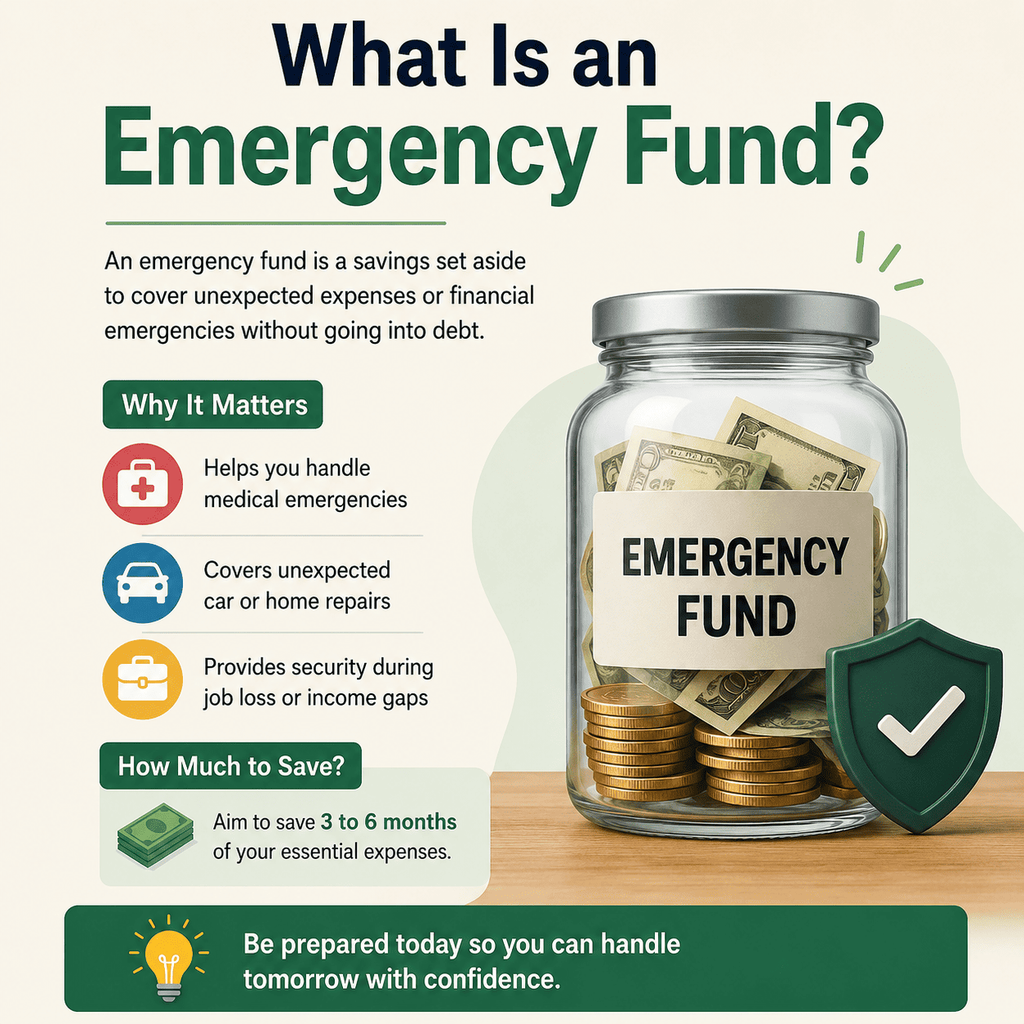
An emergency fund is a separate pool of savings reserved for genuine emergencies.
It is not meant for shopping, vacations, entertainment, expensive gadgets, or regular monthly expenses.
Common situations where an emergency fund may be useful include:
- Unexpected medical expenses
- Sudden loss of income
- Emergency travel
- Essential home repairs
- Vehicle repairs
- Urgent family expenses
- Unexpected bills
The purpose is to give you access to money when you need it most.
How Much Should You Save?
There is no single emergency-fund amount that works for everyone.
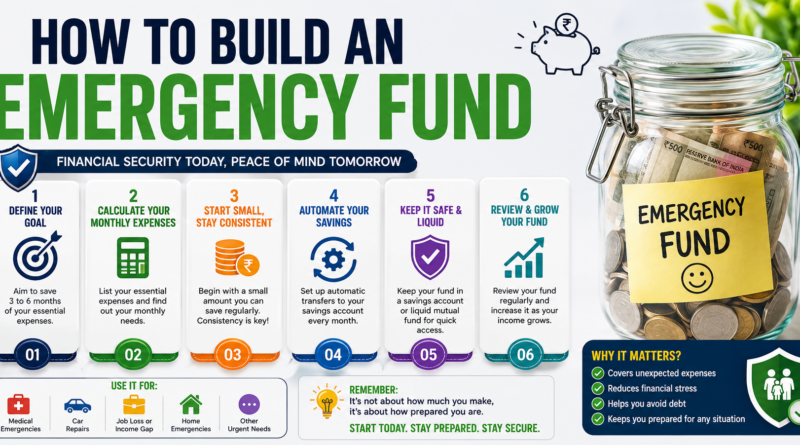
A common long-term goal is to save enough to cover around three to six months of essential living expenses. However, reaching that amount may take time, particularly if you have a limited income.
Instead of worrying about the final target, start with smaller milestones.
For example:
First goal: ₹5,000
Second goal: ₹10,000
Next goal: One month of essential expenses
Long-term goal: Three to six months of essential expenses
The important thing is to start.
1. Calculate Your Essential Monthly Expenses
Before deciding your emergency-fund target, calculate how much you actually need for basic living expenses.
Include expenses such as:
- Rent
- Groceries
- Electricity
- Transportation
- Phone and internet
- Essential loan payments
- Insurance premiums
- Other necessary household expenses
Don’t include unnecessary shopping or entertainment in this calculation.
If your essential monthly expenses are ₹15,000, for example, a three-month emergency fund would be ₹45,000.
2. Start With a Small Amount
Don’t wait until you can save a large amount.
Even ₹500 or ₹1,000 per month is a useful beginning. The objective is to create a consistent habit.
If you earn ₹20,000 per month and save ₹1,000 every month, you will have ₹12,000 after one year, excluding any interest or returns.
As your income increases, you can increase the monthly contribution.
3. Automate Your Savings
One of the easiest ways to build an emergency fund is to automate your savings.
Set up an automatic transfer shortly after your salary is credited.
For example, if your salary arrives on the first of every month, you could automatically transfer ₹1,000 to a separate savings account on the same day.
This reduces the temptation to spend the money first.
4. Keep Emergency Money Separate
Keeping your emergency fund in the same account you use for everyday spending can make it easier to spend accidentally.
Consider keeping it in a separate savings account or another suitable, easily accessible place.
The main priorities are safety, accessibility, and liquidity. An emergency fund is not primarily designed to generate high returns.
5. Use Extra Income to Grow Your Fund
Whenever you receive unexpected or additional income, consider putting part of it into your emergency fund.
Examples could include:
- Bonuses
- Freelance income
- Gifts
- Refunds
- Income from selling unused items
- Temporary additional work
You don’t necessarily need to save all of the extra money. Even putting a portion toward your emergency fund can speed up your progress.
6. Reduce Unnecessary Expenses
Look for expenses that you can temporarily reduce while building your emergency fund.
For example, you might reduce:
- Restaurant spending
- Food delivery
- Unused subscriptions
- Impulse shopping
- Entertainment expenses
- Unnecessary online purchases
You don’t have to eliminate everything you enjoy. Even small reductions can create additional money for savings.
7. Don’t Use the Fund for Non-Emergencies
Building an emergency fund requires discipline.
Before withdrawing money, ask yourself whether the expense is:
Necessary, unexpected, and urgent.
Buying a new phone because a newer model has launched is not an emergency. However, an essential repair that you cannot afford without using savings may qualify.
Having clear rules for using the fund helps prevent unnecessary withdrawals.
8. Rebuild Your Fund After Using It
Sometimes a genuine emergency will require you to use your savings. That’s exactly what the fund is for.
Don’t feel that you have failed because you had to use it.
Once the emergency is over, make rebuilding the fund your next financial priority.
For example, if you had ₹30,000 saved and needed ₹10,000 for an emergency, your new balance would be ₹20,000. Start contributing again until you reach your target.
9. Increase Your Savings When Your Salary Increases
When you receive a salary increase, avoid immediately increasing all of your lifestyle expenses.
Instead, consider directing some of the additional income toward your emergency fund.
For example, if your salary increases by ₹5,000 per month, you could put a portion of that increase toward savings.
This can help you reach your emergency-fund goal faster without dramatically changing your lifestyle.
Common Mistakes to Avoid
While building an emergency fund, avoid these common mistakes:
- Waiting until you earn a high salary
- Investing emergency money in highly risky assets
- Keeping no savings at all
- Using emergency savings for unnecessary shopping
- Borrowing money for expenses that could have been planned
- Forgetting to rebuild the fund after using it
Final Thoughts
Building an emergency fund doesn’t happen overnight. It is a gradual process that requires consistency and discipline.
Start with whatever amount you can afford, even if it is only ₹500 per month. Set small targets, automate your savings, control unnecessary expenses, and gradually work toward covering several months of essential expenses.
An emergency fund may not feel exciting, but it can provide something extremely valuable: financial peace of mind when unexpected expenses arise.
The best time to start building an emergency fund is before an emergency happens. Start small today and increase your savings as your financial situation improves.