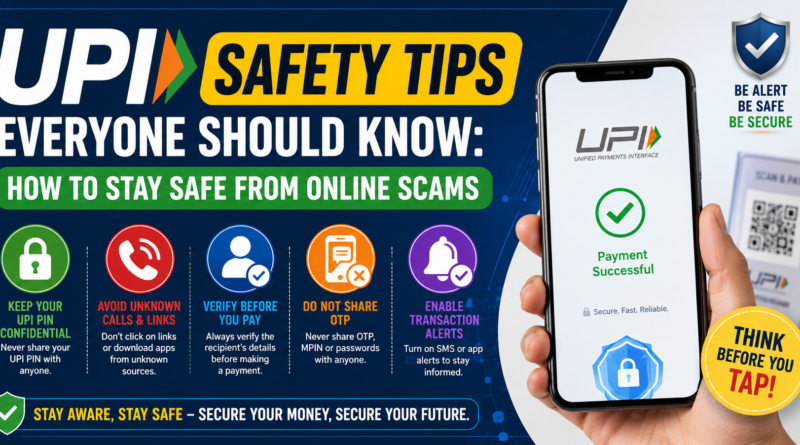
UPI Safety Tips Everyone Should Know: How to Stay Safe From Online Scams
Unified Payments Interface (UPI) has made digital payments extremely convenient in India. Whether you are paying for groceries, sending money to family, ordering food, or paying bills, UPI allows transactions to be completed within seconds.
However, the convenience of UPI also means that users need to be careful about scams and fraudulent transactions. Most UPI-related fraud does not happen because the technology itself is unsafe. Instead, scammers often try to trick people into sharing confidential information, approving transactions, or clicking on malicious links.
Here are some important UPI safety tips everyone should know.
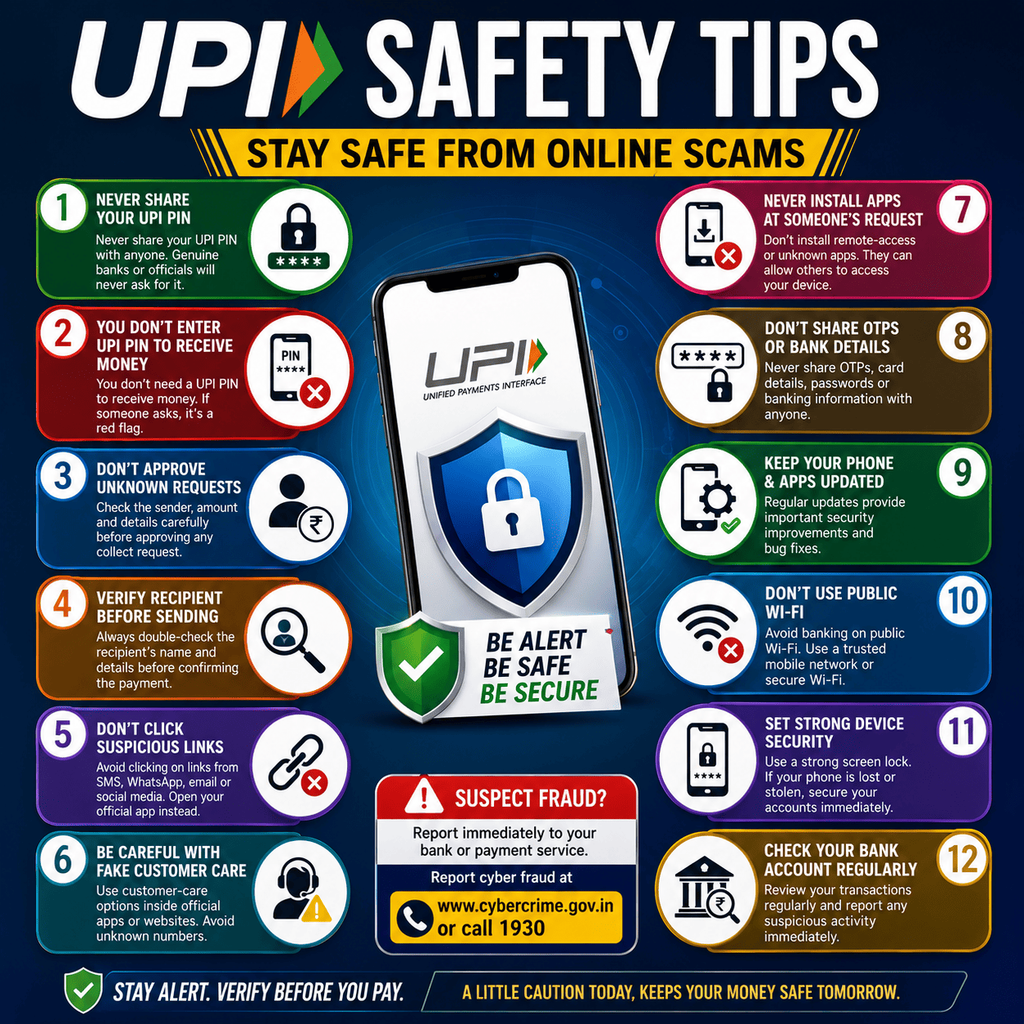
1. Never Share Your UPI PIN
Your UPI PIN is one of the most important security credentials associated with your UPI account.
Never share your UPI PIN with anyone, including people claiming to be bank employees, customer-care representatives, delivery agents, or government officials.
A genuine bank or payment service should not ask you to reveal your UPI PIN.
If someone asks for your PIN over a phone call or message, treat it as a major warning sign.
2. Remember: You Don’t Enter a UPI PIN to Receive Money
One of the most common scams involves a fraudster claiming that they are sending money to you and asking you to enter your UPI PIN.
This is a red flag.
Generally, your UPI PIN is used to authorize a payment from your account. If you are receiving money, you should not need to enter your UPI PIN simply to accept it.
Always check what the transaction screen actually says before entering your PIN.
3. Don’t Approve Unknown Collect Requests
Scammers may send payment or collect requests and then call you pretending to be someone you know.
Before approving any request, carefully check:
- Who sent the request
- The amount
- The purpose of the payment
- The recipient’s details
If you don’t recognize the request, don’t approve it.
4. Verify the Recipient Before Sending Money
UPI transactions can happen very quickly, so always double-check the recipient before pressing the payment button.
Check the displayed name and other available payment details before confirming the transaction.
This is particularly important when sending money to a new contact.
If someone gives you a UPI ID over WhatsApp or another messaging platform, verify the details independently if the payment involves a significant amount.
5. Don’t Click Suspicious Payment Links
Be cautious when receiving messages containing payment links.
Scammers may send fake links through SMS, WhatsApp, email, or social media and claim that you need to complete a payment, receive a refund, update your account, or verify your bank information.
Instead of clicking an unfamiliar link, open your official banking or UPI application directly.
6. Be Careful With Fake Customer Care Numbers
Fraudsters sometimes create fake customer-support accounts or websites.
If you have a problem with a UPI transaction, use the customer-support option inside your official banking or payment application or visit the official website of your bank or payment provider.
Avoid searching for a phone number on random websites and immediately calling it.
7. Never Install Apps at Someone’s Request
A scammer may call and claim that they need to help you fix a payment problem. They may ask you to install a screen-sharing, remote-access, or unknown application.
Do not install unfamiliar applications simply because someone asks you to.
Remote-access tools can potentially allow another person to view or control activity on your device.
8. Don’t Share OTPs or Banking Details
Your OTP, debit-card details, passwords, and banking credentials should be treated as confidential.
Never share these details with strangers over phone calls, SMS, email, WhatsApp, or social media.
Even if someone knows your name, bank name, or other personal information, don’t assume they are genuine.
9. Keep Your Phone and Apps Updated
Regularly update your smartphone operating system and banking or UPI applications.
Updates often include security improvements and bug fixes.
Also use a screen lock such as a PIN, password, fingerprint, or other security method supported by your phone.
10. Don’t Use Public Wi-Fi for Sensitive Transactions
Avoid performing important banking activities while connected to unknown or unsecured public Wi-Fi networks.
If possible, use your trusted mobile network or a secure Wi-Fi connection when making financial transactions.
11. Set Strong Device Security
Your phone itself is an important part of your digital-payment security.
Use a strong screen lock and avoid sharing your device with strangers. If your phone is lost or stolen, immediately contact your mobile operator and bank/payment provider and take appropriate steps to secure your accounts.
12. Check Your Bank Account Regularly
Make it a habit to check your bank account and transaction history regularly.
If you notice a transaction that you don’t recognize, report it immediately through the appropriate official channel.
Don’t wait several days hoping that the issue will resolve itself.
What Should You Do If You Suspect UPI Fraud?
If you believe you have been tricked into making a fraudulent transaction, act quickly.
Contact your bank or payment service through its official support channel and report the transaction. In India, financial cyber-fraud can also be reported through the National Cyber Crime Reporting Portal or by calling the official cybercrime helpline 1930.
Keep relevant transaction details, screenshots, phone numbers, messages, and other evidence available when making a complaint.
Conclusion
UPI has made everyday payments faster and easier, but users should remain alert when handling digital transactions. The most important rule is simple: never share your UPI PIN, OTP, passwords, or banking credentials with anyone.
Always verify payment requests, check the recipient before sending money, avoid suspicious links, and use only official customer-support channels.
A few seconds of caution can help protect your money from a potentially serious online scam.
Stay alert, verify before you pay, and never let anyone pressure you into making a financial transaction.