
How Much Water Should You Drink Every Day?
A Simple Guide to Daily Hydration
Water is one of the most important nutrients the human body needs. It helps regulate body temperature, transport nutrients, remove waste, support digestion and maintain normal physical and mental function. Because the amount of water a person needs can vary, there is no single number that is perfect for everyone.
Your daily fluid needs depend on factors such as age, body size, physical activity, climate, diet and overall health. People who exercise regularly or spend time in hot weather may need more fluids than someone who is mostly indoors.
How Much Water Do You Need?
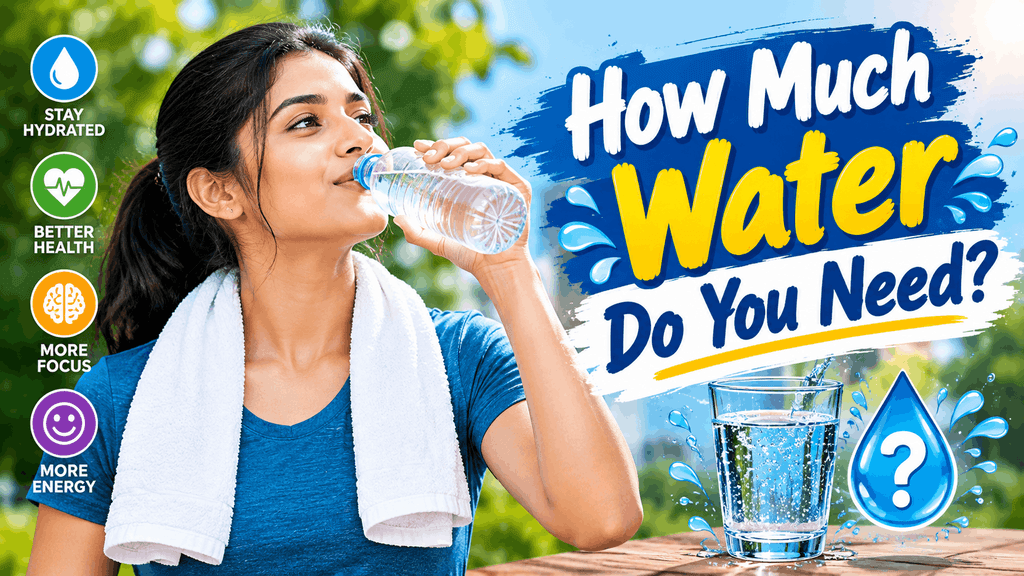
A commonly cited general guideline from the U.S. National Academies is a total daily water intake of about 3.7 litres for men and 2.7 litres for women. Importantly, these figures include water from all beverages and foods, not just plain drinking water.
Food can provide a significant amount of your daily water intake. Fruits, vegetables, soups, milk and other foods contain water and contribute to hydration.
Therefore, you do not necessarily need to drink 3.7 or 2.7 litres of plain water every day.
For many healthy adults, drinking regularly throughout the day and responding to thirst is a practical approach to maintaining hydration.
Why Is Drinking Enough Water Important?
1. Helps Maintain Body Temperature
Water plays an important role in controlling body temperature. When you become hot, your body releases sweat, which helps cool you down. Adequate fluid intake helps replace water lost through sweating.
2. Supports Digestion
Water helps keep the digestive system functioning normally. Getting enough fluids, together with adequate dietary fibre, can help support regular bowel movements.
3. Supports Physical Performance
During exercise, the body loses water through sweat. Significant fluid loss can contribute to fatigue and reduced physical performance. Drinking enough fluids before, during and after prolonged or intense exercise can help maintain hydration.
4. Helps the Kidneys Remove Waste
The kidneys use water to remove waste products from the blood through urine. Maintaining adequate hydration supports normal kidney function.
5. Supports Concentration and Daily Activities
Even mild dehydration may affect how you feel and perform. Drinking enough fluids throughout the day can help support normal concentration, alertness and physical function.
Signs You May Need More Fluids
Thirst is one of the body’s natural signals that you need fluids. Other possible signs of dehydration can include:
- Dark yellow urine
- Dry mouth
- Headache
- Tiredness
- Dizziness
- Reduced urination
- Feeling unusually thirsty
Urine colour can provide a rough indication of hydration, although it can also be affected by foods, medications and supplements.
When Do You Need More Water?
Your fluid requirements may increase in certain situations.
During Exercise
Physical activity increases fluid loss through sweating. Longer or more intense exercise generally requires more attention to hydration.
During Hot Weather
Hot and humid conditions can increase sweating and fluid loss. Drinking fluids regularly becomes particularly important when spending extended periods outdoors.
When You Are Ill
Fever, vomiting and diarrhoea can cause increased fluid loss. Replacing fluids is important, and in some situations oral rehydration solutions may be more appropriate than plain water.
During Pregnancy and Breastfeeding
Fluid requirements can increase during pregnancy and breastfeeding. Individual needs should be discussed with a healthcare professional, particularly if there are other medical considerations.
Is Drinking Too Much Water Harmful?
More water is not always better. Drinking an excessive amount of water in a short period can cause water intoxication or hyponatremia, a condition in which the sodium concentration in the blood becomes dangerously low.
This is uncommon in everyday circumstances but can occur when people consume very large amounts of water, particularly during prolonged endurance exercise.
The better approach is to drink regularly according to thirst and circumstances rather than forcing excessive quantities of water.
Tips to Stay Hydrated
- Keep a water bottle with you during the day.
- Drink water with meals.
- Drink before, during and after exercise as appropriate.
- Eat water-rich foods such as watermelon, cucumber, oranges and soups.
- Increase fluid intake when you are sweating heavily.
- Pay attention to thirst and changes in urine colour.
- Avoid relying heavily on sugary drinks for hydration.
Water vs Other Drinks
Plain water is an excellent everyday choice because it provides hydration without added sugar or calories. Milk, tea, coffee and other beverages can also contribute to total fluid intake.
However, sugary soft drinks and other high-sugar beverages can add substantial amounts of sugar and calories to the diet. For regular hydration, water is generally a simple and healthy option.
Final Takeaway
There is no universal amount of water that every person must drink each day. Your needs depend on your body, activity level, environment, diet and health.
For healthy adults, a useful general reference is about 3.7 litres of total water per day for men and 2.7 litres for women, including water from food and all beverages. Rather than trying to force a specific amount of plain water, drink regularly throughout the day and increase your fluid intake when you lose more water through sweating or illness.
If you have kidney, heart or other medical conditions that affect fluid balance, follow your healthcare professional’s advice rather than general hydration guidelines.
Important: This article provides general health information and is not a substitute for personalised medical advice.