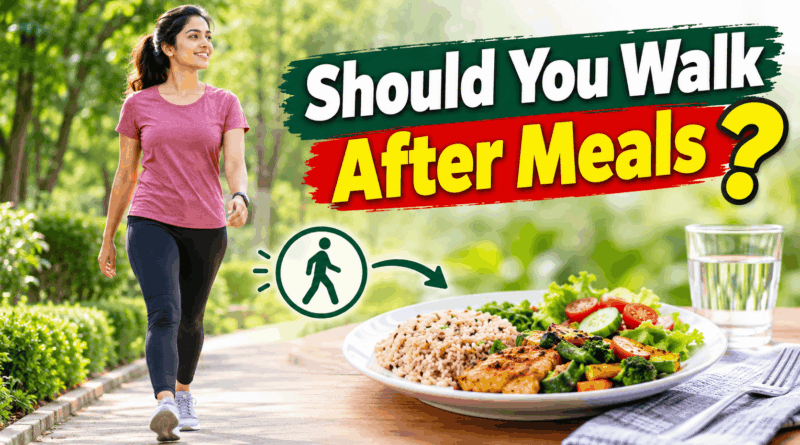
Walking After Meals
Potential Benefits and Important Tips for a Healthier Routine
Many families in India have long followed the habit of taking a short walk after dinner. Modern research suggests this old tradition may have real health benefits. A gentle stroll after eating is simple, free and needs no equipment. Here is what it may do for you, and how to do it safely.
Walking is one of the simplest ways to stay physically active, and taking a gentle walk after a meal may be a useful addition to your daily routine. You do not need expensive equipment or a gym membership to get started. Even a short walk around your home, neighbourhood, or office can help you build healthier habits.
Although walking after meals is not a cure for any health condition, it may support digestion, blood sugar management, and overall well-being when combined with a balanced diet and regular physical activity.
Potential Benefits

1. Helps manage blood sugar. This is the best-supported benefit. After a meal, blood sugar rises. Light walking makes the muscles use some of that glucose, which can reduce the post-meal spike. Studies have found that even short walks of about 10 to 15 minutes after eating can help, which is particularly useful for people with prediabetes or type 2 diabetes.
2. May support digestion. Gentle movement may help food move through the digestive system and can ease the heavy, bloated feeling some people get after a big meal. Results vary from person to person.
3. Supports heart health. Regular walking is linked to better blood pressure, circulation and cholesterol levels. Adding short walks after meals is an easy way to reach the commonly recommended 150 minutes of moderate activity each week.
4. Helps with weight management. A walk burns some calories and builds an active habit. It is not a quick fix for weight loss, but combined with balanced meals it contributes to a healthy weight over time.
5. Reduces sluggishness. Many people feel sleepy after lunch. A brief walk and some fresh air can help improve alertness and focus for the afternoon.
6. Improves mood and lowers stress. Walking, especially outdoors, can help ease stress and improve mood. An evening walk after dinner can also be a relaxing way to end the day.
7. May improve sleep. Light activity in the evening may help some people wind down and sleep better, as long as it is not intense.
Important Tips for Walking After Eating
- Start gently: Avoid suddenly beginning a fast or strenuous workout after a large meal.
- Listen to your body: Slow down or stop if you experience discomfort, dizziness, or unusual breathlessness.
- Wear comfortable footwear: Choose shoes that support your feet and suit the walking surface.
- Stay hydrated: Drink water according to your needs and the weather.
- Be consistent: Choose a time and route that fit comfortably into your daily schedule.
- Consider your health needs: If you have diabetes, heart disease, mobility problems, or another medical condition, ask your healthcare professional about an appropriate exercise routine.
Who Should Be Careful
People with acid reflux may find that walking soon after eating worsens symptoms and may need to wait longer. Those with diabetes who take insulin or certain medicines should talk to their doctor, since activity can lower blood sugar and, in some cases, cause it to drop too low. Anyone with heart disease, severe joint problems or other health conditions should also check with a doctor before changing their routine. If you feel dizzy, short of breath, or have chest pain, stop and seek medical help.
This article is for general information and is not a substitute for medical advice.