
Ranabaali Movie Review
Vijay Deverakonda and Rashmika Mandanna Impress in a Historical Action Drama
Introduction
Ranabaali is one of the notable Telugu theatrical releases of October 2026. Starring Vijay Deverakonda and Rashmika Mandanna, the film combines historical fiction, action, romance, and the struggle against British colonial rule. Directed by Rahul Sankrityan, the movie explores a dramatic period in Indian history, using the devastating Great Madras Famine of 1876–1878 as its backdrop.
The film attracted attention because of its ambitious historical setting, powerful lead cast, and the reunion of Vijay Deverakonda and Rashmika Mandanna. The actors previously appeared together in Geetha Govindam and Dear Comrade, making their on-screen pairing another major attraction.
However, the film’s large-scale presentation and strong central idea have received mixed reactions. While the performances, historical atmosphere, and selected action sequences have earned appreciation, the slow narration and lengthy runtime have been identified as significant drawbacks.
Ranabaali Movie Story
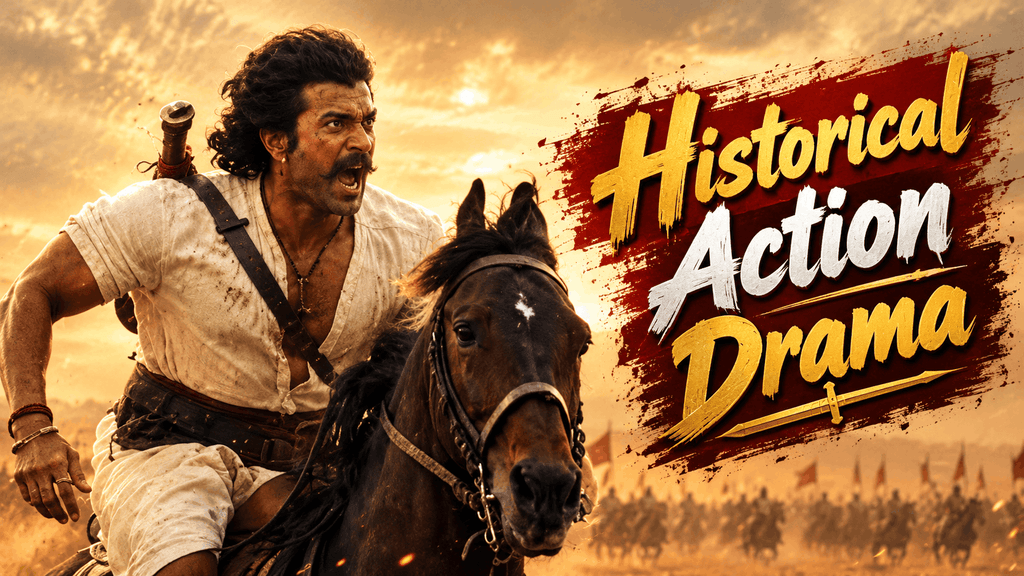
Ranabaali follows a rebellious warrior who rises against British oppression during a period marked by famine, suffering, and exploitation. Vijay Deverakonda plays the titular character, Ranabaali, who becomes a symbol of resistance against colonial power.
The story draws inspiration from the hardships faced by ordinary people during the Great Madras Famine. Food shortages, poverty, and the suffering of vulnerable communities form an important part of the film’s historical setting. Against this background, the protagonist’s journey develops into a struggle for dignity, survival, and resistance.
Rashmika Mandanna plays Jayamma, Ranabaali’s wife and an important figure in his personal journey. Their relationship provides an emotional element within the larger narrative of rebellion and conflict.
The film also introduces folklore and mystical elements associated with Bhadramallanna, giving the story a blend of historical drama and imaginative storytelling. Arnold Vosloo plays Sir Theodore Hector, a British antagonist who represents the colonial power opposing the protagonist.
Rather than presenting only a conventional action story, Ranabaali attempts to connect the struggles of individuals with the broader suffering of a population. The central concept is promising, although the execution does not always maintain the emotional intensity that the subject demands.
Performances
Vijay Deverakonda
Vijay Deverakonda carries the film as its central character. His rugged appearance, screen presence, and commitment to the warrior role are among the film’s attractions. He brings intensity to the action-oriented portions and makes an effort to portray a character shaped by oppression and resistance.
However, a powerful central performance alone cannot compensate for every weakness in the screenplay. Some scenes would have benefited from stronger character development and more emotionally effective writing.
Rashmika Mandanna
Rashmika Mandanna plays Jayamma, providing emotional support to the story. Her scenes with Vijay are among the more engaging elements of the film, and their chemistry adds warmth to an otherwise intense historical narrative.
Her character could have been explored more deeply, particularly in relation to the larger conflict and the personal challenges faced by the people around her.
Arnold Vosloo
Arnold Vosloo adds an international presence to the cast as the British antagonist. His role contributes to the film’s colonial setting and the conflict between the protagonist and the forces of oppression.
The supporting cast also helps establish the historical atmosphere and the challenges faced by ordinary people during this difficult period.
Direction and Screenplay
Director Rahul Sankrityan takes on an ambitious subject by combining historical events, fictional characters, action, and folklore. The film attempts to bring an overlooked chapter of suffering and resistance to a wider audience.
The historical backdrop gives the narrative significance, and some sequences effectively communicate the hardship experienced by ordinary people. Nevertheless, the screenplay struggles to maintain a consistent pace throughout its lengthy runtime.
Certain scenes feel repetitive, and the narrative sometimes prioritises action and spectacle over deeper emotional development. The second half, in particular, could have benefited from tighter editing and a more focused progression of events.
The film’s intentions are commendable, but stronger writing could have transformed its promising premise into a more memorable cinematic experience.
Music and Technical Aspects
Ajay–Atul’s music contributes to the film’s dramatic atmosphere. The background score and songs aim to enhance the emotional and action sequences, although the overall musical impact may vary from scene to scene.
The production design creates a period setting appropriate to the story. The cinematography adds visual scale to the historical locations and action sequences, with the cave fight standing out as one of the film’s notable visual moments.
At the same time, some visual effects and portions of the technical presentation appear less convincing. The nearly three-hour runtime also makes the film feel longer than necessary.
Better editing, more consistent visual effects, and a tighter screenplay could have significantly improved the overall experience.
Advantages of Ranabaali
- Vijay Deverakonda’s performance: His screen presence and commitment to the central warrior role provide an important attraction.
- Vijay and Rashmika’s chemistry: Their scenes together add emotional warmth to the historical action drama.
- Interesting historical backdrop: The Great Madras Famine provides a serious and meaningful setting for the story.
- Ambitious storytelling: The combination of colonial history, rebellion, and folklore offers a distinctive concept.
- Visual presentation: Several action sequences and period settings create a cinematic atmosphere.
- Emotional moments: Scenes depicting the suffering of ordinary people help communicate the human cost of famine and oppression.
- Ajay–Atul’s music: The musical elements contribute to the film’s dramatic tone.
Disadvantages of Ranabaali
- Slow narration: The story loses momentum in several portions, affecting audience engagement.
- Lengthy runtime: At approximately 178 minutes, the film demands considerable patience.
- Repetitive sequences: Some scenes revisit similar conflicts without adding enough new information.
- Uneven screenplay: The strong central concept is not consistently supported by effective writing.
- Limited character development: Certain characters could have received greater emotional depth.
- Mixed visual effects: Some technical sequences do not fully match the scale of the production.
- Inconsistent emotional impact: Despite its serious subject, the film does not always create the connection needed to make its key moments powerful.
Final
Ranabaali is an ambitious Telugu historical action drama that attempts to combine colonial history, human suffering, rebellion, romance, and folklore. Vijay Deverakonda delivers a committed performance, while Rashmika Mandanna adds emotional value through her role and chemistry with the lead actor.
The film’s strongest elements include its historical setting, selected action sequences, production scale, and central idea. However, slow narration, repetitive scenes, and a lengthy runtime prevent the story from reaching its full potential.
For audiences who enjoy historical dramas, period action films, and stories about resistance against oppression, Ranabaali may offer some worthwhile moments. Viewers who prefer fast-paced storytelling and consistently strong emotional engagement may find it less satisfying.
Ranabaali Final Rating: 2.5/5