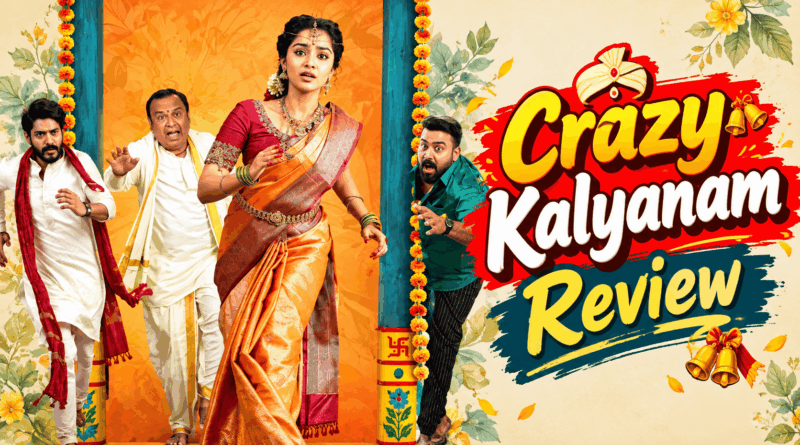
Crazy Kalyanam Movie Review
Anupama Parameswaran and Tharun Bhascker’s Family Drama
Introduction
Crazy Kalyanam is a Telugu family entertainer that combines comedy, romance, emotional relationships, and the challenges surrounding marriage. Released in theatres on October 16, 2026, the film features Anupama Parameswaran, Tharun Bhascker, and veteran actor V.K. Naresh in important roles. Directed by Badrappa Gajula, the movie explores the conflict between traditional family expectations and the dreams of younger people.
The film focuses on family relationships, a father’s concerns about his daughters’ futures, and the importance of education and financial independence. With a rural Telangana setting and a wedding-related storyline, Crazy Kalyanam attempts to connect with audiences who enjoy family dramas with a social message.
Crazy Kalyanam Movie Story

The story revolves around Parvathalu, played by V.K. Naresh, a father who wants to protect his family’s reputation and secure a good future for his daughters. His experiences following his elder daughter’s marriage create concerns about the kind of partner his younger daughter should choose.
The situation becomes complicated when the elder daughter’s husband, Balaraju, played by Tharun Bhascker, develops drinking habits and creates financial and family problems. These experiences influence Parvathalu’s decisions about his younger daughter’s marriage.
Meanwhile, Keerthi, played by Anupama Parameswaran, has her own ambitions and expectations. Rather than simply accepting her father’s plans, she wants to build a future based on her personal choices. Her relationship with Uday, played by Akhil Raj, adds another layer to the conflict.
The central storyline explores whether a parent’s concerns and a daughter’s personal aspirations can find common ground. The film also raises questions about the pressure families place on marriage, the importance of choosing a suitable life partner, and why education can be more valuable than spending excessively on weddings.
Performances and Character Development
Anupama Parameswaran brings the perspective of a young woman who wants to make decisions about her own life. Her character gives the story an emotional foundation, particularly through the conflict between personal ambitions and family expectations.
V.K. Naresh plays a father whose decisions are influenced by his experiences, worries, and desire to protect his daughters. His character is central to the family drama, and the emotional portions provide some of the film’s more engaging moments.
Tharun Bhascker takes on a character that contributes to the film’s family conflicts and comedic situations. His performance adds a different dimension to the narrative, although the screenplay could have used the character more effectively to strengthen the comedy.
Akhil Raj Uddemari supports the romantic storyline as Uday. His character represents the younger generation’s hopes and feelings, while Kireeti Damaraju and the supporting cast contribute to the wider family setting.
Overall, the performances help the film communicate its intended message, even when the writing does not consistently maintain the same level of engagement.
Direction and Screenplay
Director Badrappa Gajula chooses a relatable subject: the clash between parental expectations and the independence of young adults. Marriage, family reputation, financial stability, and women’s education are familiar themes for Telugu audiences.
The rural setting also gives the story opportunities for family humour and culturally recognisable situations. However, the execution is uneven. Some romantic and family sequences feel slower than necessary, and the screenplay could have created stronger transitions between comedy and emotion.
The central idea has potential, but more focused writing and tighter editing could have made the story more engaging. A stronger balance between entertainment and the social message would have helped the film appeal to a wider audience.
Music and Technical Aspects
Suresh Bobbili handles the music, which contributes to the film’s emotional and celebratory atmosphere. Songs are a natural part of a wedding-centred family drama, but their placement is important to maintaining the story’s pace.
Cinematographer Shyam Dupati handles the visuals, while editor Shravan Katikaneni works on the film’s overall presentation. The rural backdrop supports the narrative, although tighter editing could have improved the flow of certain sequences.
The technical elements generally serve the story, but they do not completely overcome the limitations of the screenplay.
Advantages of Crazy Kalyanam
- Relatable family subject: Marriage, parental concerns, and family relationships are familiar topics for Telugu audiences.
- Strong central message: The film encourages viewers to consider the value of education and independence alongside marriage.
- Anupama Parameswaran’s role: Her character gives the story a perspective centred on a young woman’s ambitions.
- V.K. Naresh’s performance: The father’s character provides an important emotional element.
- Rural Telangana backdrop: The setting adds cultural familiarity to the family situations.
- Family viewing potential: Its combination of relationships, romance, and comedy may appeal to viewers who prefer social and family dramas.
Disadvantages of Crazy Kalyanam
- Uneven screenplay: The story does not maintain a consistently engaging pace.
- Slow stretches: Some romantic and family sequences could have been shorter and more effective.
- Limited comedy impact: The film has opportunities for humour, but not every situation delivers the expected entertainment.
- Predictable elements: Certain conflicts involving marriage and family expectations may feel familiar to regular Telugu moviegoers.
- Editing concerns: Tighter editing could have improved the overall flow and reduced unnecessary pauses.
- Uneven emotional impact: The message is meaningful, but some scenes could have developed the characters and their relationships more deeply.
Final Verdict
Crazy Kalyanam attempts to deliver a family-oriented Telugu drama with romance, comedy, and a meaningful message about education and personal independence. Anupama Parameswaran and V.K. Naresh help bring the family conflict to life, while Tharun Bhascker adds another dimension to the story.
However, the film’s uneven screenplay, slower portions, and opportunities for stronger comedy prevent it from reaching its full potential. Audiences who enjoy rural family dramas and stories about relationships may find some worthwhile moments, but viewers expecting consistently entertaining comedy may feel that the film could have been sharper.
Crazy Kalyanam Final Rating: 2.5/5