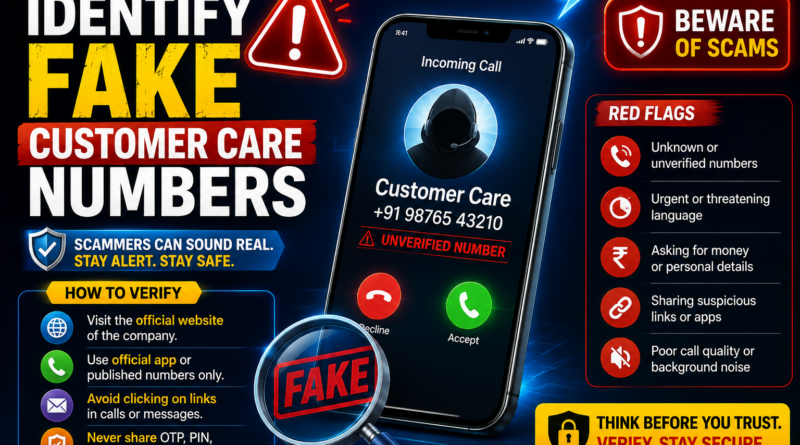
How to Identify Fake Customer Care Numbers: 12 Ways to Stay Safe
When people face problems with banking, online shopping, UPI payments, mobile services, travel bookings, or other digital services, they often search online for customer care numbers. Unfortunately, scammers know this and may create fake customer-support numbers to trick people into sharing personal information or transferring money.
A fake customer-care representative may sound professional and claim to work for a bank, shopping company, courier service, telecom operator, or government department. They may ask for an OTP, UPI PIN, card details, or even request remote access to your phone.
Knowing how to identify fake customer-care numbers can help you avoid online fraud.
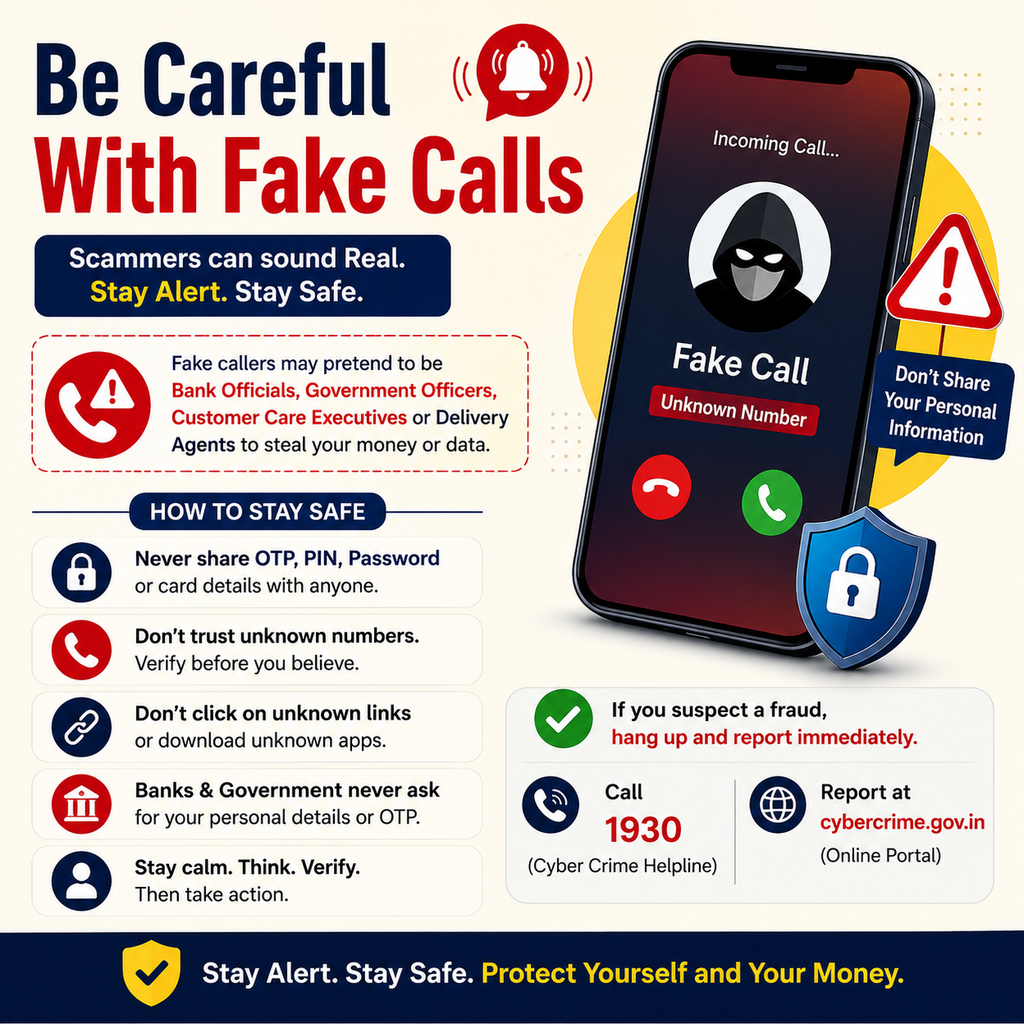
1. Use the Company’s Official Website
The safest way to find a customer-care number is through the company’s official website or official application.
Don’t rely on phone numbers found randomly in search results, social media posts, comments, blogs, or online forums.
Scammers can post fake numbers that appear genuine.
Instead, type the company’s known website address into your browser or open its official app and find the support section.
2. Don’t Trust Numbers Sent by Strangers
Be cautious if someone sends you a customer-care number through WhatsApp, SMS, Telegram, email, or social media.
Even if the message looks professional, the number may belong to a scammer.
Verify the number independently through the company’s official website or application before calling.
3. Be Careful With Search Results
When you search for customer support online, several results may appear.
Some may be advertisements, unofficial pages, fake profiles, or websites designed to look like legitimate support pages.
Don’t assume that the first phone number you see is genuine.
Always cross-check the number with the company’s official support page.
4. Genuine Customer Care Shouldn’t Ask for Your UPI PIN
Never give your UPI PIN to a customer-care representative.
If someone claims to be helping you with a refund or payment problem and asks for your UPI PIN, stop the conversation.
Your UPI PIN is confidential and should never be shared with another person.
5. Never Share an OTP Over a Call
A scammer may say:
“I need the OTP to verify your account.”
Don’t share it.
An OTP can be used to authorize certain actions or transactions. Treat unexpected OTP requests as a major warning sign.
If you receive an OTP you didn’t request, don’t provide it to anyone.
6. Be Suspicious of Remote-Access Requests
Fake customer-care agents may ask you to install a remote-access or screen-sharing application.
They may claim that they need access to your device to fix the problem.
Don’t give strangers remote access to your phone or computer.
If technical assistance is genuinely required, use the company’s official support process.
7. Don’t Trust Pressure Tactics
Scammers often create urgency.
They may tell you:
- “Your account will be blocked.”
- “Your refund will expire.”
- “You must verify your account immediately.”
- “Your SIM will be disconnected.”
- “Pay now to avoid a penalty.”
Don’t allow threats or pressure to make you reveal sensitive information.
Stop and verify the claim through an official channel.
8. Check the Company’s Official Social Media Accounts
Some companies provide customer support through verified social media accounts.
However, scammers can create fake accounts with similar names and logos.
Before contacting an account, check whether it is the company’s genuine official profile.
Don’t share confidential information publicly or through direct messages unless you are certain you are communicating with the legitimate company.
9. Be Careful With Fake Refund Calls
Refund scams are common.
A scammer may call and claim that your refund is ready. They might ask you to scan a QR code, enter your UPI PIN, share an OTP, or install an application.
If you are expecting a refund, verify its status directly through the company’s official website or application.
You don’t need to trust an unexpected caller simply because they know details about your order.
10. Don’t Share Your Card PIN or Banking Password
Customer-care representatives should not need your ATM PIN, card PIN, internet-banking password, or UPI PIN.
Never reveal these credentials over a phone call.
If someone asks for them, end the call and contact the company through its official support channel.
11. Verify Before Making Any Payment
A fake customer-care agent may ask you to make a payment to solve a problem.
Before transferring money, stop and verify why the payment is required.
Be particularly cautious if the person asks you to transfer money to a personal UPI ID or bank account.
Don’t make payments simply because someone claims to be from customer support.
12. Don’t Trust Caller ID Alone
A phone number appearing with a company name or logo does not automatically prove that the caller is genuine.
Caller-ID information can sometimes be misleading or manipulated.
Always verify the person’s claim independently.
What Should You Do If You Contacted a Fake Customer-Care Number?
If you realize that you have contacted a scammer, stop communication immediately.
If you shared sensitive information, change relevant passwords and contact your bank or service provider through an official channel.
If money has already been transferred and you suspect financial cyber fraud in India, contact your bank immediately and report the incident through the official cybercrime reporting system or by calling 1930.
Keep screenshots, phone numbers, call records, messages, transaction IDs, and other evidence.
How to Find Genuine Customer Support Safely
A simple process can reduce your risk:
Step 1: Open the company’s official app or website.
Step 2: Go to the Help or Customer Support section.
Step 3: Find the official contact information.
Step 4: Use that number instead of a number sent by an unknown person.
Step 5: Never share confidential credentials during the call.
Conclusion
Fake customer-care numbers are designed to look genuine and make people believe they are speaking with a trusted company representative.
The safest approach is to find customer-support information directly through the company’s official website or application.
Never share your OTP, UPI PIN, ATM PIN, card PIN, or banking password with a caller. Don’t install remote-access software, don’t click suspicious links, and don’t transfer money because someone is pressuring you.
If you are unsure whether a customer-care number is genuine, stop the conversation and verify it independently.
When it comes to your money and personal information, taking a few extra minutes to verify can prevent a major loss.